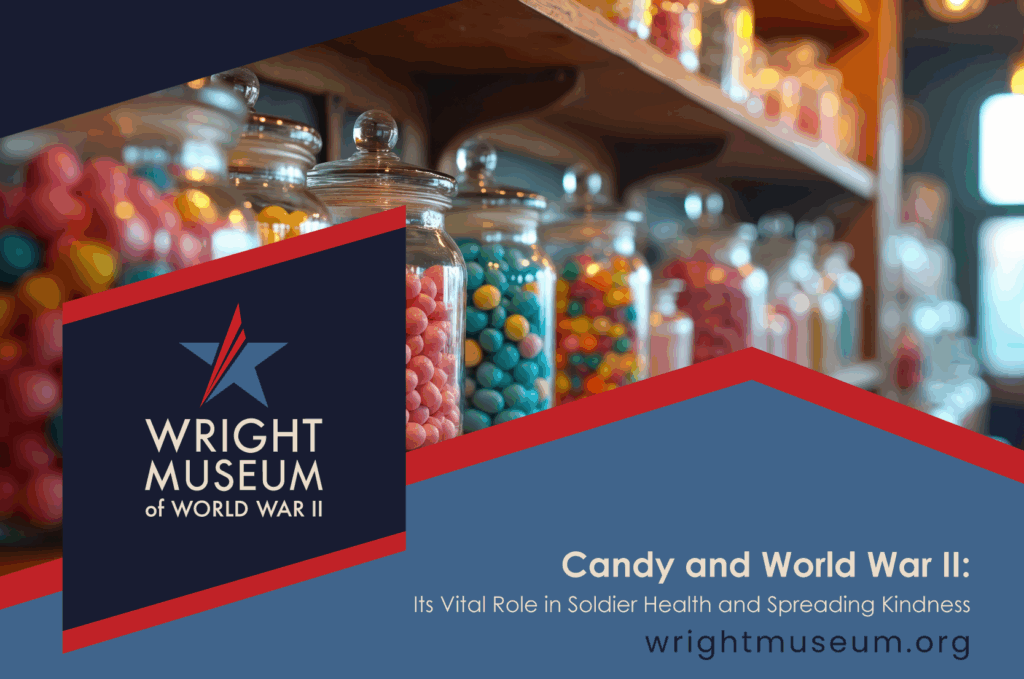
Around 2000 B.C., some enterprising Egyptian, Greek, or Roman first dipped a nut or fruit into honey—and an industry was born. The world never looked back. From its ancient origins to its early mass-production days post-Industrial Revolution, when sweets became affordable and were marketed as home health remedies, candy has captured human hearts and stomachs in a way few other foods have.
As early as the Civil War, Americans were using candy to supplement soldiers’ rations, not only for its ability to produce quick energy but also for its role in bolstering morale in truly horrific conditions. Though military chocolate rations were first introduced in field rations during World War I, it wasn’t until World War II that significant developments were made to wartime candy rations that still have lasting impacts on today’s global candy industry.
Companies like Hershey and Tootsie Roll are synonymous with World War II military candy rations. Tasked with developing chocolate that could withstand extreme weather, from below-freezing temperatures to the tropical climates of the Pacific Theater, Hershey’s Ration D chocolate bar was a staple of field rations during the war. The Tootsie Roll, with its pliable chocolate form, not only provided quick energy and boosted morale, but it was also called into service to plug bullet holes during emergency situations. Chewing gum helped with stress relief and served as an antidote to thirst. Besides these, World War II innovations like M&Ms, inspired by candies eaten by soldiers in the Spanish Civil War, were developed to address the need for quick energy and tastes of home. Its famous slogan, “Melts in your mouth, not in your hands,” is one of advertising’s most-recognized taglines and honors its creation as a chocolate candy designed to withstand war climates during World War II.
Military chocolate used more cocoa butter and shortening to prevent melting, along with powdered sugar and corn syrup to extend shelf life and withstand harsh conditions. While military chocolate differs some from what is commercially sold, its flavor profile remains universally recognizable. Besides chocolate, companies produced caramel, jellybeans, candy corn, Necco wafers, and other resilient candies. The inclusion of toffee, peanut butter, and caramel into military chocolate not only served to break up the monotony of plain chocolate but also contributed to soldiers’ stamina and performance. Sugar provided quick energy while cocoa butter and peanut butter provided slower, sustained energy. Today’s energy bars and snacks continue to rely on these same principles. It’s just one of the many ways in which innovations in the candy industry during World War II continue to influence modern candy production. Wartime focuses on durability, long-lasting energy, and ease of consumption continue to bring us much-loved favorites today. The next time you bite into a peanut butter cup, toss a handful of jellybeans into your mouth, or debate whether candy corn is good, remember that we owe all these flavors and textures to the need to produce highly durable, tasty, energy-filled treats for World War II soldiers.
Candy didn’t just play a vital role in the energy, performance, and spirits of World War II soldiers; it also served as an important ambassador during and after the war. American soldiers gifted children they encountered with candy and gum, creating positive interactions that served to foster better relations with civilians. Stories of soldiers trading sweets with both friendly and enemy counterparts demonstrate just one more way in which candy created small moments of connection during the prolonged fighting. Perhaps the most famous role candy has ever played in relation to wartime happened just after the conclusion of World War II.
When the war ended, Germany was divided into two parts. East Germany, controlled by the Soviet Union, and West Germany, controlled by Allied countries. The city most affected by this split was Berlin, divided between the two by what came to be known as the Berlin Wall. In an effort to oust Allied control of West Berlin, which was completely surrounded by East German territory, the Soviet Union implemented a blockade of West Berlin, refusing to allow food and supplies into the city. The Allies responded with Operation Vittles, more commonly referred to as the Berlin Airlift. From 1948 to 1949, spanning 464 days, American pilots flew missions into West Berlin, bringing much-needed food and supplies to the beleaguered inhabitants.
One pilot, Lieutenant Gail Halvorsen, shared a couple of pieces of chewing gum he had in his pocket with some of the German children during one of his airlift missions. Inspired by the way the children instinctively split the two pieces of gum among themselves, he promised them he would bring more gum and candy to them the next time he came. Telling the children they would know he was coming because he would “wiggle” the wings of his C-54 aircraft, Halvorsen took it upon himself to gather sweet treats for the children. Though he initially acted without the permission of his superiors, he was told to continue his work due to good public relations. Americans and American corporations rallied to his cause, donating candy for Halvorsen and his fellow pilots to deliver. By the time the Berlin Airlift ended, Halvorsen and other pilots had delivered 23 tons of candy to German children, often airdropping the candy attached to tiny “parachutes” made from handkerchiefs. Operation Little Vittles, as it was known, became a defining moment of the early Cold War and a massive triumph for the United States’ newest military service, the U.S. Air Force. After the Berlin Wall fell on November 9, 1989, many of the children who received candy provisions from “Uncle Wiggly Wings” or the “Candy Bomber,” as Halvorsen was known to them, sought him out to thank him for giving them a little hope.
Whether serving as an ambassador of hope and kindness through the acts of pilots like Gail Halvorsen or providing stamina for soldiers while also giving them a little morale boost, candy played an important role during World War II and the ensuing Cold War. From innovations that still influence the candy made today, bringing us creative flavors (root beer-flavored chewing gum, popular during the war) and favorites that have become staples, candy is more than just an impulse purchase at the supermarket or convenience store. It’s a link to our military history and the creative innovations that wartime inspires.
For more links to our military history, including the Wright Museum’s unique tribute to America’s 250th birthday, be sure to visit the Museum beginning May 1, 2026. In the meantime, test your knowledge of military-use candy with our monthly trivia quiz.
For more information on candy and its role during World War II, be sure to read these articles.
“How Candy Changed During World War II”