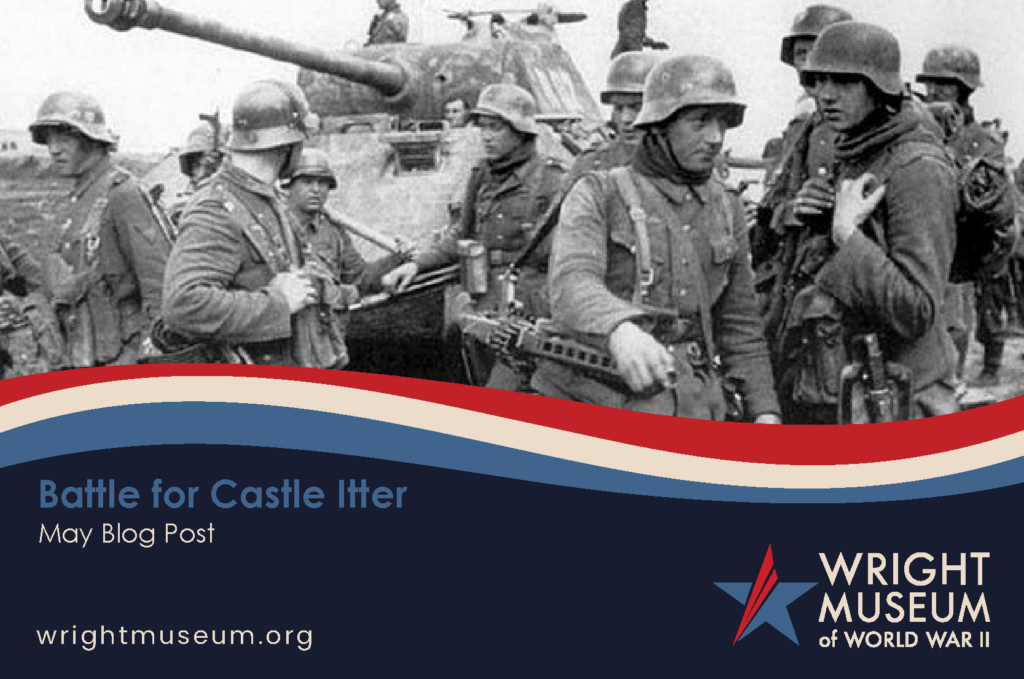
In May 1945, American soldiers, German Wehrmacht troops, and French prisoners of war joined forces to defend an Austrian castle, Castle Itter from the Waffen-SS.
A Castle, Unlikely Allies, and the War’s Final Days
By early May 1945, World War II in Europe was almost over. Adolf Hitler was dead, German forces were collapsing on every front, and Allied troops were pushing deep into Germany and Austria. Yet in the mountains of the Austrian Tyrol, the war’s endgame produced one of its most unlikely, most dramatic, last stands.
On May 5, 1945, American soldiers, German Wehrmacht troops, Austrian resistance fighters, and a group of high-profile French prisoners fought side by side to defend a medieval castle against attacking Waffen-SS forces. For the only time during the war, former enemies became comrades-in-arms as they worked together to hold Castle Itter until help could arrive. Historians have since called it “the strangest battle of World War II,” and its story challenges the simple “us versus them” picture many of us carry of the war in Europe.
Perched above the village of Itter in western Austria, Schloss Itter had stood for centuries before World War II. In 1943, the castle took on a new and ominous role when the SS converted it into a special prison linked administratively to the Dachau concentration camp. At Castle Itter, the Nazis held a small but influential group of French prisoners, including former prime ministers Édouard Daladier and Payl Reynaud, senior military commanders like General Maxime Weygand and General Maurice Gamelin, and other political and cultural figures.
As the Third Reich collapsed in the spring of 1945, life inside Castle Itter grew more uncertain and more dangerous. Local SS units began to abandon their posts, but roving SS formations still threatened the castle and its prisoners. With the front lines shifting rapidly and Allied units moving closer, the men imprisoned at Itter suddenly found themselves caught between a dying regime and an approaching liberation, uncertain which would find them first.
In the days that followed, a Yugoslav prisoner slipped away to seek Allied help, a German major chose to defy his orders, and a young American tank officer agreed to lead a rescue mission into the mountains. Together, they would turn Castle Itter into a last redoubt of unlikely allies, standing against the remnants of the SS in one of the war’s most remarkable final battles.
What Was Castle Itter?
Castle Itter looked every inch the storybook castle long before it became a footnote in World War II history. The Nazi regime used the castle to house prisoners it deemed too important, or troublesome, to be housed with the general inmate population. Alongside the men mentioned above, Castle Itter imprisoned other notable figures, including labor leaders, intellectuals, and relatives of famous politicians. For the SS, concentrating these individuals in one remote Alpine location made them easier to watch and to use, if necessary, as bargaining chips in the war’s final days.
Life inside Castle Itter was harsh, but conditions were not identical to those in the wider concentration camp system. Prisoners endured isolation, uncertainty, and the constant threat of SS violence, yet they also navigated an unusual coexistence with their captors in the castle’s cramped spaces. As the war dragged on, the French inmates formed a tense community within the castle’s walls, carrying their prewar political rivalries and resentments with them into captivity. Old arguments about responsibility for France’s defeat in 1940 did not disappear simply because of their new living situation.
By the spring of 1945, however, events were changing rapidly. With the Third Reich collapsing and front lines moving closer, the castle’s status as a quiet backwater began to erode. Guard units were thinned out or reassigned, the chain of command grew confused, and rumors of approaching American forces filtered up into the mountains. For the men imprisoned at Castle Itter, the stone walls that had once symbolized permanent captivity now felt increasingly fragile even as the danger beyond them was growing just as quickly as the hope of liberation.
The Collapse of the Reich and a Chance to Escape
By the spring of 1945, the Third Reich was in free fall. Hitler was dead, Allied armies were driving into Germany from the west and south, and Soviet forces were closing in from the east. In Austria’s Tyrol region, the chaos of the collapsing front came directly to Castle Itter’s front door. For the prisoners inside, the end of the war must have felt both very close and very uncertain.
As Nazi command structures unraveled, the SS presence at the castle began to thin. Guards and administrators slipped away, some deserting outright and others redeploying or simply fleeing before the advancing Americans could arrive. On May 3, 1945, the remaining SS staff abandoned Castle Itter altogether, leaving the French prisoners and a handful of foreign laborers suddenly in control of the fortress, though they were still surrounded by countryside where die-hard SS units were known to be operating.
Recognizing that they could not defend the castle alone, the inmates decided to gamble on a risky search for help. That same day, a Yugoslav prisoner and handyman, Zvonimir Čučković, persuaded the prison commander to let him leave on an errand but instead set off with a letter written in English asking any American soldiers he met to come to the prisoners’ aid. Čučković traveled miles through territory still dotted with German checkpoints, eventually encountering elements of American forces and alerting them to the situation at the castle.
Back at the castle, the prisoners waited to see if Čučković would succeed. Fearing an SS counterattack, they sent out a second messenger, a Czech cook, who reached the nearby town of Wörgl. There he found Major Josef Gangl and a small group of Wehrmacht soldiers who had decided to defy their orders, cooperate with the local Austrian resistance, and protect civilians from reprisals during the war’s final days. Gangl now faced a dramatic choice: continue trying to keep his men and the townspeople safe, or risk everything by approaching American forces to organize a rescue mission for Castle Itter.
The People Behind the Defense of Castle Itter
The rescue of Castle Itter hinged on a handful of individuals who chose, in the war’s final days, to act on conscience as much as on orders. Their decisions brough American soldiers, German Wehrmacht troops, local resistance fighters, and French prisoners together in one of World War II’s most unlikely alliances.
One of the central figures was First Lieutenant John “Jack” Lee Jr., a tank officer in the U.S. 23rd Tank Battalion of the 12th Armored Division. Described by later accounts as energetic, bold, and sometimes impulsive, Lee was exactly the kind of officer willing to take a calculated risk in a rapidly changing battlefield. When Čučković’s message and later reports about a castle full of prominent French prisoners reached American units, Lee agreed to lead a small mixed force, including his Sherman tank “Besotten Jenny,” toward the village of Itter to investigate, and, if necessary, attempt a rescue.
On the German side, Major Josef Gangl emerged as another pivotal personality. A career artillery officer, Gangl had become deeply disillusioned with the Nazi leadership by 1945 and had already begun cooperating with Austrian resistance members in and around the town of Wörgl to shield citizens from SS reprisals. When the Czech cook from Castle Itter reached the major with the news that the prisoners were effectively unguarded and in danger from roving SS units, Gangl chose to act. He decided that in addition to protecting the town, he would help organize a defense of the castle, even if it meant openly joining forces with the Americans.
Inside the castle, the French prisoners themselves were far from passive. Former prime ministers Daladier and Reynaud, generals Weygand and Gamelin, along with other prominent inmates navigated their political differences in order to work with their would-be rescuers. Later accounts recall spirited arguments and sharp exchanges among the French leaders even as they prepared to take part in the defense of the castle.
Local Austrian resistance members also played a critical role, though their names are less well known. In the surrounding villages, anti-Nazi Austrians had begun cooperating with Gangl to prevent senseless destruction as retreating SS units moved through the area. When plans were formed to reach Castle Itter, these resistance fighters provided knowledge of local roads, bridges, and SS positions, information desperately needed by the Americans operating in unfamiliar terrain.
Together, these individuals—an American lieutenant, a German major, prominent French prisoners, and local resistance fighters—formed the core of what would soon become a very unusual defensive coalition at Castle Itter.
The Road to the Castle
The approach to Castle Itter began with a delicate and dangerous step: contact between Gangl’s Wehrmacht detachment and nearby American forces. Determined to protect both the civilians of Wörgl and the prisoners at Itter, Gangl decided to risk being shot as a traitor by approaching the Americans to propose a joint effort. He and a small group of German soldiers drove out under a white flag until they encountered elements of the U.S. 12th Armored Division, when he was able to explain the situation and request help securing the castle.
Lieutenant Lee quickly recognized both the danger and the opportunity. With the war’s front lines shifting hour by hour, intelligence about SS units threatening Allied-held territory was compelling. So was the idea of rescuing high-value prisoners. Lee pulled together a small, improvised force comprised of “Besotten Jenny,” a handful of American tankers and infantrymen, and Major Gangl’s volunteers from the Wehrmacht and the Austrian resistance. It was an unusual sight even for the war’s chaotic final days: American and German soldiers riding together toward a fight, not against one another, but against the SS.
The column set out toward Itter, passing through terrain that remained dotted with German troops of uncertain allegiance. Along the way, they encountered at least one SS roadblock, where the presence of Wehrmacht uniforms and a German-marked vehicle helped them bluff their way through without a firefight. The risk was constant: A single misunderstanding or a loyal SS patrol could have turned the mission into a disaster.
As the mixed American-German force climbed into the hills, the defenders at Castle Itter prepared as best they could. Prisoners and remaining helpers checked weapons, scouted firing positions along the walls, and tried to anticipate how an SS attack might unfold. When Lee’s group finally arrived and made contact, the outlines of the coming battle began to take shape: a small coalition force, limited ammunition, a medieval fortress not designed for modern warfare, and the knowledge that significant SS units were still operating in the area.
In the hours that followed, Lee, Gangl, and their men would turn Castle Itter into a joint American-German-French strongpoint, placing soldiers at key points along the walls, positioning the Sherman tank to dominate the approach road, and preparing to hold out until a larger American relief force could reach them.
The Battle of Castle Itter: May 5, 1945
At dawn on May 5, 1945, the quiet around Castle Itter shattered under the sound of gunfire. From the tree line and slopes below the fortress, an estimated 100 to 200 Waffen-SS troops from the 17th SS Panzergrenadier Division opened fire with machine guns, mortars, and at least one 88 mm cannon, determined to retake the castle and its high-profile prisoners. Inside the walls, barely 30 defenders comprised of American tankers and infantry, Wehrmacht volunteers, Austrian resistance fighters, and several armed French prisoners scrambled to man their positions.
From the outset, the defenders relied heavily on the Sherman tank “Besotten Jenny,” which Lee had positioned near the castle gate to cover the main road. Its machine guns raked the hillside and tree line, breaking up early SS probes and helping keep attackers from massing at the walls. At the same time, riflemen and machine-gunners on the parapets traded fire with the SS, who used the surrounding woods and buildings for cover as they inched closer. The medieval fortress offered thick stone walls but only limited vantage points, forcing Lee and Gangl to shift their men repeatedly to plug gaps and respond to incoming fire.
As the morning wore on, the SS brought their heavier weapons to bear. Shells from the 88 mm cannon slammed into the upper stories of the castle, showering the courtyard with masonry and splinters and eventually knocking out “Besotten Jenny” in a burst of fire and smoke. Fortunately, the tank’s crew had already been pulled back into the castle, so the loss of the Sherman cost the defenders firepower but no lives. With the tank destroyed and ammunition running low, Lee ordered his mixed force to fall back from the outer walls and prepare to defend the inner keep if the SS broke through the gate.
The French prisoners, seeing how precarious the situation had become, insisted on joining the fight. Several took up rifles and moved to firing positions along the walls, adding their fire to that of the Americans and Germans as SS infantry pressed closer. Later accounts recall a striking scene: former French Army Chief of Staff General Maxime Weygand helping man a machine gun and senior French leaders, who had once argued bitterly over politics and strategy, now sharing the castle’s defenses with an American lieutenant and a German major. In the chaos of battle, old rivalries briefly fell away before the face of a common enemy.
Tragedy struck when Major Gangl, who had moved through the castle checking positions and encouraging his men, tried to help relocate former French Prime Minster Paul Reynaud to a safer spot away from incoming fire. As he exposed himself in a courtyard doorway, a sniper’s bullet hit him, killing him almost immediately. Gangl’s death was a severe emotional blow to the defenders, but his men continued to fight on, determined not to let the SS take the castle or its prisoners.
By early afternoon, the Waffen-SS assault intensified. With the outer defenses compromised and the gate under direct threat, Lee prepared for a last stand inside the keep, even asking the French generals for their advice. According to later retellings, they urged him to keep fighting, remarking that they wished they had shown such resolve earlier in the war. Outside the walls, SS troops rolled a gun into position to blast open the main entrance, just as shouts of “Amerikanische Panzer!” (“American tanks!”) rang out from the attackers’ lines.
Moments later, the sound of engines and heavy weapons fire signaled the arrival of a larger American relief force: infantry and armor from the 142nd Infantry Regiment of the 36th Infantry Division, which had been pushing toward Itter and was alerted to the castle’s plight by earlier messages and a daring breakout by French tennis star and prisoner Jean Borotra. The fresh American troops attacked the SS from behind, pouring fire into their positions and quickly turning the tide. Caught between the castle’s defenders and the new arrivals, the SS force broke and retreated, leaving dead and wounded scattered along the slopes below Castle Itter. For the battered defenders inside the walls, the long, tense day’s fighting was finally over.
Why Castle Itter Still Matters
The Battle of Castle Itter is often described as “the strangest battle of World War II,” but its importance goes beyond that memorable label. Fought just days before Germany’s surrender, it was one of the only known instances in the war where American soldiers and German troops fought side by side as allies, joined by Austrian resistance fighters and French prisoners, against a Waffen-SS force still loyal to the collapsing Nazi regime. That unlikely alliance forces us to think about World War II not only in terms of nations and uniforms but also in terms of individual choices, moral courage, and the gray areas that appear as authoritarian systems fall apart.
For museums and educators, Castle Itter offers a human-scale story that opens the door to larger conversations about responsibility and conscience during wartime. Major Josef Gangl’s decision to defy orders, cooperate with local resistance, and ultimately die protecting a former French prime minister shows how a career Wehrmacht officer chose civilians and prisoners over an ideology he no longer believed in. Lieutenant Jack Lee’s willingness to trust a former enemy and lead a small, mixed force into danger to rescue political prisoners highlights the role of personal judgment in moments when the “rulebook” no longer applies. Stories like theirs invite visitors to ask uncomfortable questions: What would I have done in their place? How do we balance loyalty to a system with basic human values?
The battle also complicates how we remember World War II as “the good war.” On one level, it affirms familiar themes: a desperate stand against the SS, the rescue of political prisoners, and the defeat of a fanatical regime in its final days. On another, it shows that even within that larger struggle, individuals within the German Army made divergent choices—some continuing to fight for the regime, others turning against it at great personal risk. Remembering Castle Itter together with other “outlier” stories does not erase the crime of Nazi Germany, but it does encourage a more nuanced understanding of how ordinary people act inside oppressive systems.
Today, Castle Itter can feel surprisingly contemporary. Visitors see former enemies setting aside years of propaganda and hatred long enough to confront a more immediate threat, and they recognize echoes in current conflicts where local alliances cross old lines to protect civilians. The battle underscores how quickly “us versus them” thinking can break down when institutions fail and how essential it is to have people who are willing to take personal risks for the sake of others. The story of Castle Itter invites reflection on extremism, the dangers of blind obedience, and the enduring possibility of cooperation across divisions when lives are at stake.
For a nuanced, holistic approach to World War II, be sure to visit the Wright Museum of World War II during our 2026 season. From our popular Time Tunnel exhibit to our seasonal exhibits like this season’s From Sails to Atoms: The Portsmouth Naval Shipyard, the museum frames the events of World War II both at home and overseas into a compelling narrative that emphasizes the continued importance of the lessons learned during the war. If you’d like to see what Lee’s beloved “Besotten Jenny” might have looked like, be sure to visit our restored Sherman tank in our Military Gallery.
For more in-depth discussions on World War II topics, be sure to plan to visit the museum on Tuesday nights throughout the summer and early fall. Information on guest lecturers, topics, and more is available by visiting our lecture series webpage.
Sources and Further Reading
Information for this article was found on the following sites:
“Battle for Castle Itter” – Encyclopedia Britannica
“The Battle for Castle Itter” – HistoryNet
“The Strangest Battle of World War II? Uncovering the Battle of Castle Itter” – History Guild
“The Battle of Castle Itter” – Beaches of Normandy Tours
“When Americans, Germans and POWs fought the SS from the walls of a castle” – Task & Purpose
“The Battle for Castle Itter: Americans, Germans, and French, Oh My!” – The Chronicles of History
“The Battle of Castle Itter (1945)” – Sabaton Historical Fact page