
For as long as the United States has existed, Americans have honored their military veterans. Those who fought in the Revolutionary War were given federal or state land grants and modest pensions as symbols of the gratitude all new Americans had for those who fought for independence. The Washington Monument, erected to honor and respect the country’s first defenders, still serves as one of Washington, D.C.’s most recognized structures today.
The Civil War, with its high casualty rates and the profound changes it brought about, required prioritizing veteran care in the aftermath of the war. The U.S. Sanitary Commission established during the war became the precursor to veteran health care, providing medical aid and sanitary advice. Inspired by Florence Nightingale and a similar British organization, the Sanitary Commission was staffed primarily by women volunteers who improved sanitary conditions, reduced disease and suffering, and assisted soldiers and their families even after the war ended. The federal government issued pensions to Union soldiers and their families, and veterans advocacy groups began to become more prominent.
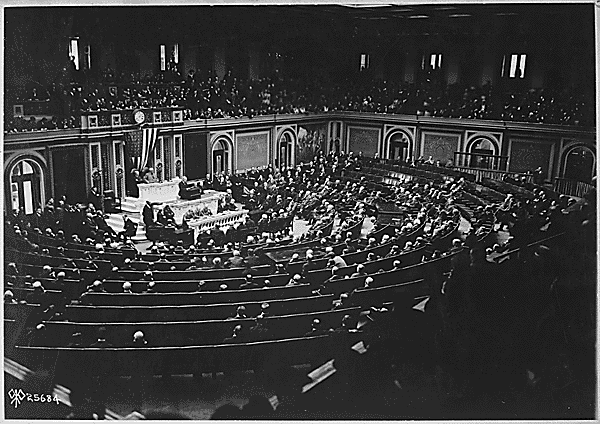
When America entered World War I, also known as the “Great War,” over 4 million Americans served overseas, exposed to trench warfare, chemical attacks, and diverse diseases. With so many Americans serving in horrific conditions, the need for comprehensive veterans’ care become increasingly important. The Veteran’s Bureau was established in 1921, broadening benefits for those who served in the military. Now, returning veterans could receive vocational training, housing benefits, educational opportunities, and more. The Veterans Bureau would eventually become the Department of Veterans Affairs, which remains today as America’s foremost institution devoted to caring for veteran needs. Advocacy groups continued to gain ground in championing veterans benefits and community services, including the still-operating American Legion (founded in 1919).
Though at one time America might have thought that World War I signified “the war to end all wars,” World War II saw 16 million Americans serve. The sheer scale of those who served required additional government support at the end of the war. The Servicemen’s Readjustment Act of 1944, more commonly known as the G.I. Bill, offered educational benefits, low-interest home and business loans, and unemployment compensation for returning veterans, designed to help them reintegrate into civilian life. Medical care and counseling were also offered to facilitate reintegration. Besides honoring the commitment to take care of those who served, the G.I. Bill had added benefits, fostering economic stimulation, providing a foundation for stability, and addressing societal concerns by easing the transition back to civilian life.
In more modern times, America has continued to honor its military members with robust, comprehensive services offered through the Department of Veterans Affairs; with military honors like the Medal of Honor, first established in the 19th century and still the country’s highest military honor; with the establishment of national cemeteries where veterans and their families may choose to be buried; and with two national holidays—Veterans Day, which has been celebrated in November since World War I ended (first as Armistice Day and then as Veterans Day beginning in 1954), and Memorial Day, celebrated on the last Monday of May each year since 1971 and honoring the men and women who have paid the ultimate sacrifice while serving in the U.S. Armed Forces.
Though each generation of those who answer the call to serve in America’s all-volunteer armed forces has faced unique challenges, they have all contributed to safeguarding America’s freedoms. At the Wright Museum, we are honored to commemorate and share the unique stories and contributions of the World War II generation, also known as the “Greatest Generation,” whose impact on American society is still being felt today. However, we know that their greatness was built on the backs of the generations that came before. Next season, in honor of the 250th birthday of the United States, the Museum will be hosting a special exhibit honoring the contributions of all who have served in an American military uniform from our country’s inception to the present day.
We invite you to join us from May through October 2026 for this special commemoration as well as to experience the history and impact of those who came before, especially those of the “Greatest Generation,” and to whom we owe our continued freedom.
For more information on how America assisted returning World War II veterans, take a look at this recording of a webinar hosted by The National WWII Museum in August 2021.
Photograph Citations
“President Wilson reading the Armistice terms to Congress” November 11, 1918. National Archives photo 111-SC-25684. Photographs of American Military Activities. NAID: 530764. Unrestricted.
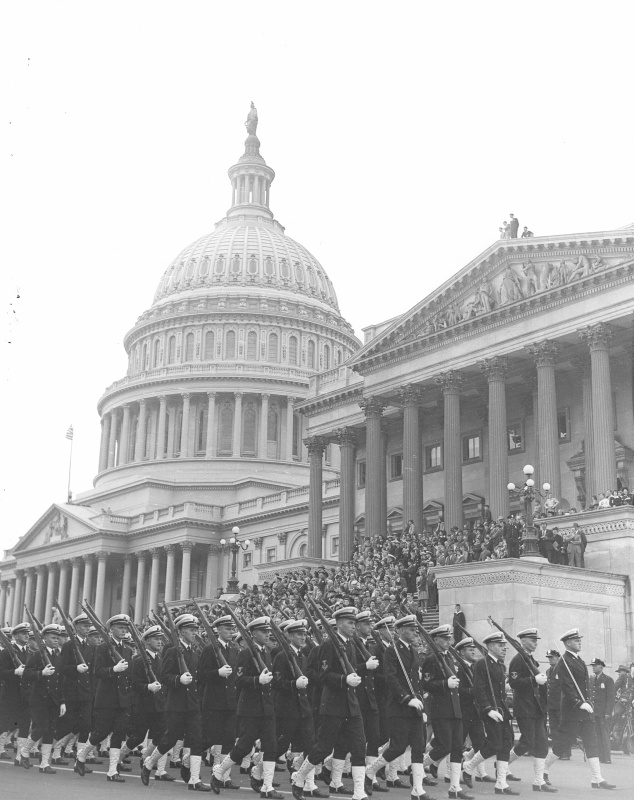
“Troops march past Capitol building” October 5, 1945. National Archives photo 73-2049. Photographs Relating to the Administration, Family, and Personal Life of Harry S. Truman. NAID: 338955194. Unrestricted.
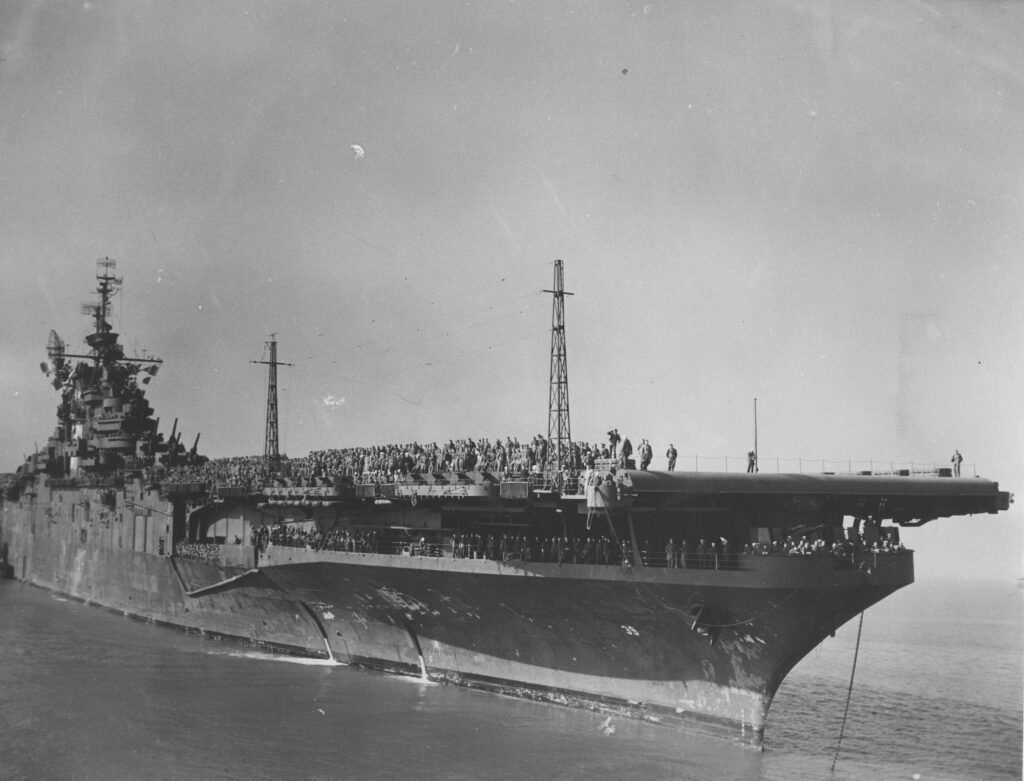
“USS Lake Champlain with Returning Personnel” November 27, 1945. National Archives photo 336-H-33-L16091. Photographic Albums of Prints of Hampton Roads Port of Embarkation. NAID: 138926945. Unrestricted.