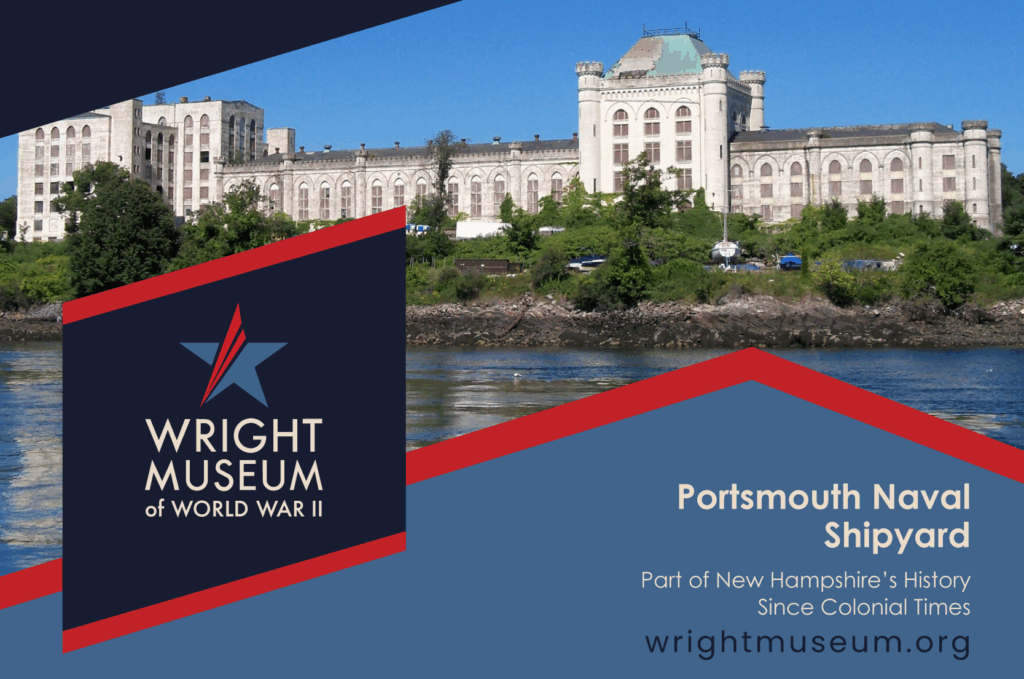
In 2026, we will celebrate the United States of America’s semiquincentennial, or 250th anniversary. At the Wright Museum, we are commemorating this milestone with our upcoming exhibit highlighting the amazing history of the Portsmouth Naval Shipyard (PNS). This exhibit is part of the NH Heritage Museum Trail’s America 250 celebrations. Our upcoming exhibit will feature information about PNS’s entire history, with particular attention to its vital role producing submarines during World War II. Interested in a little sneak peek at the impressive contributions PNS has made to America’s history? Read on for some incredible facts about Portsmouth Naval Shipyard and its role in America’s military history.
Portsmouth Naval Shipyard was created on June 12, 1800, under the presidency of John Adams and remains as one of four operating shipyards in the United States Navy. Though created as a federal shipyard in 1800 and visited by George Washington in 1789 when he reviewed the spot for the future shipyard, the shipbuilding history of the area goes much further back in American history.
Located on a cluster of conjoined islands in the Piscataqua River, the area is uniquely suited for shipbuilding. Situated at the corner where New Hampshire and Maine meet, the area has historically been an area of friction for the two states, with each claiming ownership. Though Maine prevailed in a 2000 Supreme Court ruling, New Hampshire resolutely retains its belief that PNS lies within its territory. Though the area has been a historical source of tension, back in 1609, residents of the region mostly worked in the shipbuilding industry for the British Empire. Shipbuilders created the first warship built in the colonies, HMS Falkland, in the area where PNS would later exist. During the American Revolutionary War, the USS Raleigh was built on Badger’s Island, becoming the first ship to fly an American Flag into battle; the Raleigh has featured on New Hampshire’s state seal and flag since 1784.
Its rich history with shipbuilding certainly played a part in the decision to build the federal naval shipyard in the area in 1800. In 1814, the Portsmouth Naval Shipyard launched its first warship, the 74-gun ship of the line Washington. By 1838, the Franklin Shiphouse was constructed, and it would remain productive for 100 years until a fire destroyed it in March 1936. In 1854, the Franklin Shiphouse was expanded to accommodate the largest wooden ship ever built there, the USS Franklin, so named for the shiphouse in which it was constructed.
In 1905, the PNS played host to a very important peace conference that culminated in the signing of the Treaty of Portsmouth, effectively ending the Russo-Japanese War. For his efforts in arranging the peace talks, President Theodore Roosevelt received the 1906 Nobel Peace Prize. During World War I, the Portsmouth Naval Shipyard began building submarines, launching its first, the USS L-8, which has the distinction of being the first submarine to be built in any U.S. Navy shipyard. The Shipyard had found its new purpose. Post-World War I, PNS building efforts switched almost exclusively to submarines, though overhauls and maintenance for warships continued. For instance, in 1955, PNS overhauled the USS Constitution, nicknamed “Old Ironsides.” Built in 1797, “Old Ironsides” is the oldest commissioned naval vessel still afloat.
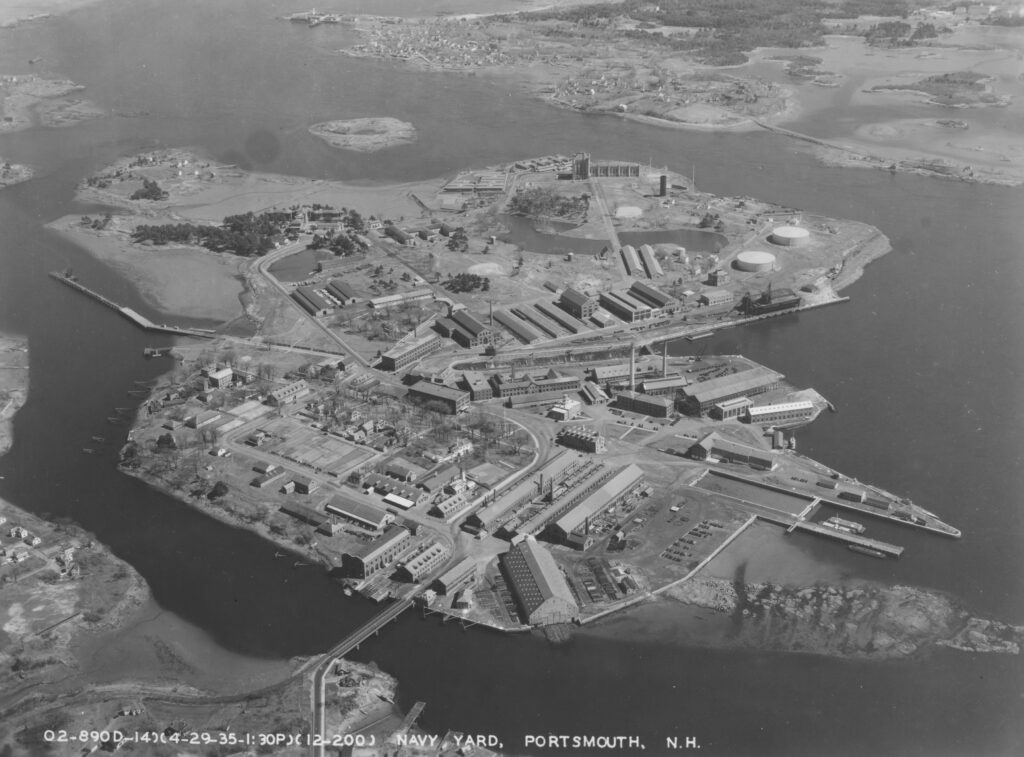
Throughout World War II, PNS built and launched 78 submarines and employed over 25,000 civilians. On January 27, 1944, PNS set a world record for most submarines launched in a single day when it launched four new submarines. After World War II, both its production history and strategic location made Portsmouth Naval Shipyard the obvious choice to become the Navy’s primary submarine design and development center.
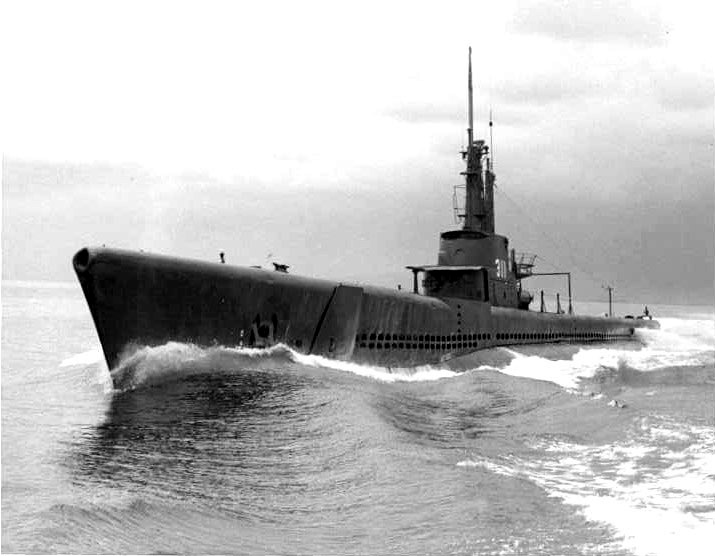
In 1953, PNS produced the USS Albacore, the fastest submarine in the world at the time. With a unique teardrop-shaped hull, this submarine paved the way for the future of hull design. In 1957, the USS Swordfish became the first nuclear submarine built at PNS. The last submarine built at the Shipyard launched in 1969, the USS Sand Lance. A total of 134 submarines have been built, if not designed, at PNS. Today the facility continues to operate for repair and upgrade of U.S. Navy submarines.
Though changing times have altered the Portsmouth Naval Shipyard’s mission throughout the last few decades, PNSY remains a vital and historically significant part of the region’s story. The 1995 commissioning of the Trident-armed Ohio-class submarine USS Maine at the shipyard highlights its continued importance to the history of the United States Navy.
Mark your calendars to visit the Wright Museum when we open for the season (May 1–October 31, 2026). Beyond the exhibit honoring the historical contributions of Portsmouth Naval Shipyard, the Museum will host additional exhibits honoring America’s 250th anniversary as well as exciting art exhibits and our permanent collections.
For more information on the Portsmouth Naval Shipyard, visit the following websites and online articles:
“The 1936 fire destroyed that piece of Portsmouth Naval Shipyard history”
“A Short History of Portsmouth Naval Shipyard”
“Portsmouth Naval Shipyard Historical Foundation”
“Portsmouth Naval Shipyard, NH History”
“Naval Systems Command: History of Portsmouth Naval Shipyard (PNS)”
*Correction 1/27/26: The original version of this post referred to the USS Maine as the first Trident-class submarine. There is no Trident-class of submarines in the U.S. Navy; the sub’s correct designation is Ohio-class, of which it was the 16th produced. The USS Maine is armed with Trident ballistic missiles.