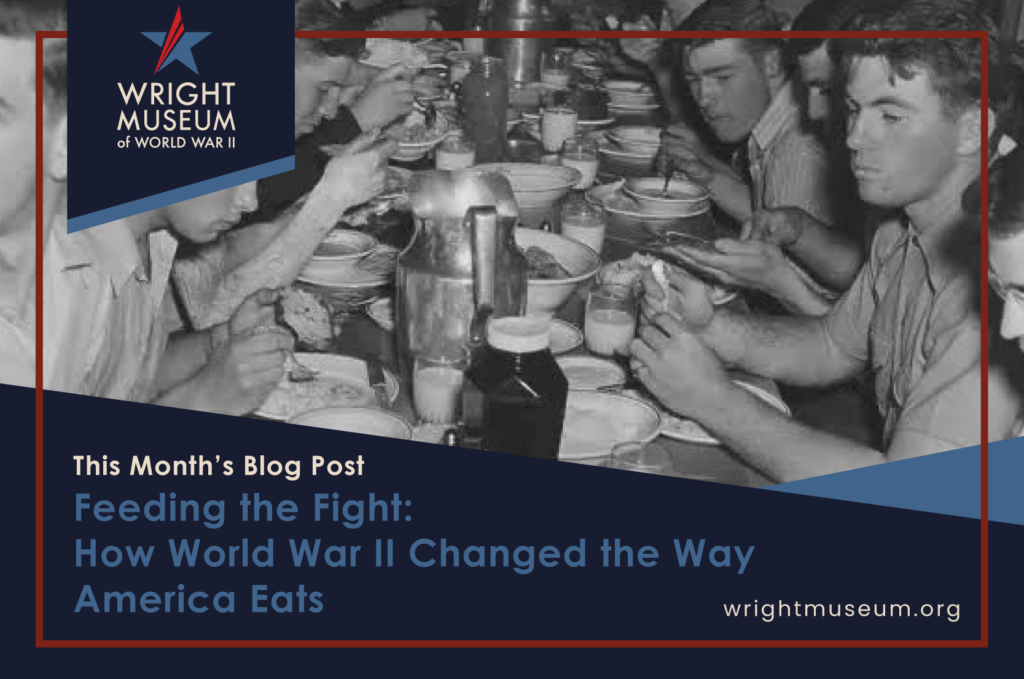
To feed millions of troops in every climate on earth, the United States turned the dinner plate into a research problem. Many of the answers are in the food still sitting in our pantries.
In April 1937, an Army officer brought the Hershey Chocolate Corporation one of the strangest requests it had ever received.
Captain Paul Logan, from the Army Quartermaster General’s office, wanted a chocolate bar, but not a good one. Meeting with the company president, William Murrie, and chief chemist, Sam Hinkle, Logan laid out his requirements. The bar had to weigh about four ounces, hold up in high temperatures, pack a great deal of food energy, and taste “just a little better than a boiled potato.” The point was not pleasure. If an emergency ration tasted like a candy bar, soldiers would eat it long before any emergency arrived.
Hinkle’s team blended chocolate liquor, sugar, skim milk powder, cocoa butter, oat flour, and vanillin, deliberately using less sugar than an ordinary chocolate bar. The result was a paste so heavy it could not be poured. Each portion had to be weighed, kneaded, and pressed into its mold by hand. The finished bar held 600 calories and was, as Smithsonian Magazine later put it, “tantamount to a rock in texture and feel.” Soldiers would learn to cut it with a sharp knife. Making the first 90,000 bars took three weeks.
Logan approved. The Army named it Field Ration D.
It was a modest beginning. No one working the presses at Hershey that summer could have known that by the end of 1945 the plant would be turning out roughly 24 million ration units a week. Nor could they have known that their bitter little bar was one of the first products of an effort that would change what Americans ate for the rest of the century.
World War II was, among many other things, the largest food-science laboratory in American history. Feeding soldiers and allies across deserts, jungles, oceans, and frozen mountain passes produced new rations, new ways to process and preserve food, and a new national science of nutrition. When the war ended, much of that work left the laboratory and went straight to the grocery store.
An Army Marches on Its Stomach
The Army had been working on the rations problem longer than most Americans realized. In 1936 it opened the Quartermaster Subsistence Research and Development Laboratory at the Chicago Quartermaster Depot, marking the beginning of the modern era of American ration research. Its first job was to replace the reserve rations of World War I: canned corned beef and bacon, hardtack biscuits, ground coffee, sugar, salt, and tobacco with rolling papers.
Then the draft revealed a problem at home. When the Selective Service Act of 1940 began calling up young men, as many as one quarter of them were malnourished and unfit to serve. A decade of Depression-era diets had left widespread shortages of B vitamins, which contributed to what the National Park Service describes as a “tired, nervous, and depressed population.” To fight a modern war, the country needed healthier citizens as much as it needed better rations.
The government responded quickly. In 1940 the National Research Council created the Food and Nutrition Board “to advise on nutrition problems in connection with National Defense.” In May 1941, about 900 delegates filled the Mayflower Hotel in Washington, D.C. for the National Nutrition Conference for Defense. They included doctors, home economists, dietitians, farmers, union leaders, and food industry professionals. A poster from the same year spelled out the stakes: “There’s Danger when people tire too easily; when minds are slow to think; when bodies can’t fight disease.”
The old saying that an army marches on its stomach had become a matter of national defense.
The Science of the Plate
One of the most lasting results of that effort is something most Americans never think about. In May 1941, the Food and Nutrition Board adopted the nation’s first recommended dietary allowances, which it published in 1943. These guidelines covered calories, protein, calcium, iron, vitamin A, thiamin, riboflavin, niacin, vitamin C, and vitamin D. The standards have been revised many times since, but today’s national nutrient standards trace their language directly to this wartime work.
The loaf on the kitchen table changed, too. Milling wheat into white flour strips out B vitamins, so in 1940 commercial bakeries began voluntarily enriching white bread with thiamin, niacin, riboflavin, and iron. By the end of 1942, nearly three quarters of the nation’s white bread was enriched, and advertisements promised that “Enriched Bread is Building a Healthier America.” In January 1943, enrichment became mandatory, a requirement codified in War Food Order No. 1.
That same year, the government simplified the board’s sample diet into the “Basic 7,” a wartime food guide that sorted everything a family ate into seven groups:
- Green and yellow vegetables
- Oranges, tomatoes, and grapefruit
- Potatoes and other fruits and vegetables
- Milk and milk products
- Meat, poultry, fish, and eggs, or dried beans and peanut butter
- Bread and cereals
- Butter and fortified margarine
It was an early ancestor of the food pyramid, and the fact that butter had a food group of its own says a great deal about the times.
Persuading Americans to change what they ate turned out to be a problem for social scientists as well as nutritionists. Early in 1942, at the request of her mentor, Ruth Benedict, anthropologist Margaret Mead came to Washington as executive secretary of the National Research Council’s Committee on Food Habits. The committee applied anthropological methods to problems of food distribution and preparation, including which foods mattered most to people from different national backgrounds. Its conclusion is one that rationing officials learned again and again: making sure people could get the foods most meaningful to them “was important to maintaining morale.”
Even board games went to war. In 1942, the Servel Company of Evansville, Indiana, which had stopped making refrigerators in order to build wings for warplanes, published a nutrition game called “Vita-Min-Go.” As they ate through the day, players tracked points for six vitamins and minerals on color-coded cards, aiming for at least 20 on each. “The prize for winning is better health and more vigor,” the game promised. “The penalty for losing is greater chance of sickness.”
Rations in the Field
While scientists studied the home front diet, the Quartermaster laboratory in Chicago was trying to feed soldiers who might be nowhere near a kitchen.
The C Ration
The Army’s answer to the World War I reserve ration was Field Ration C. When it was tested during 1940 maneuvers, soldiers found the cans too large, the meat too repetitive, the food too rich, and the beans too plentiful. Even so, the Army judged it “one of the best food rations . . . ever issued to the Army.” The 16-ounce cans were replaced with 12-ounce cans opened with a key, and chocolate and soluble coffee were added.
In August 1941, the Army ordered 1.5 million C rations. The earliest menus were meat and beans, hash, and stew. During the war the Army added meat and spaghetti, chopped ham with eggs and potatoes, and ham and lima beans. Soldiers disliked ham and lima beans so much that it became something of a legend, yet it stayed in the lineup until well into the Vietnam War. Three C-ration meals provided about 3,000 calories a day. The food could be eaten cold, although, as one Defense Department history puts it, it “tasted better cooked.” The steady complaints were that the meals were monotonous and heavy to carry on foot.
The K Ration
The lighter alternative came from Minnesota. In 1941, Ancel Keys, a University of Minnesota physiologist serving as a special assistant to the secretary of war, began working with the Army on a ration a soldier could carry into combat. The first versions looked like a sack lunch. “We bought the stuff down at Witt’s, the best market in the Twin Cities in those days,” Keys recalled in “Meet Monsieur Cholesterol,” a 1979 profile by William Hoffman in the University of Minnesota Update. He picked out hard biscuits, dry sausage, and chocolate and tested the results on soldiers first at Fort Snelling then at larger trials at Fort Benning, Georgia. According to Keys, Lt. Gen. Lesley J. McNair decided that “this was going to be the combat ration because it was easy to hand out.”
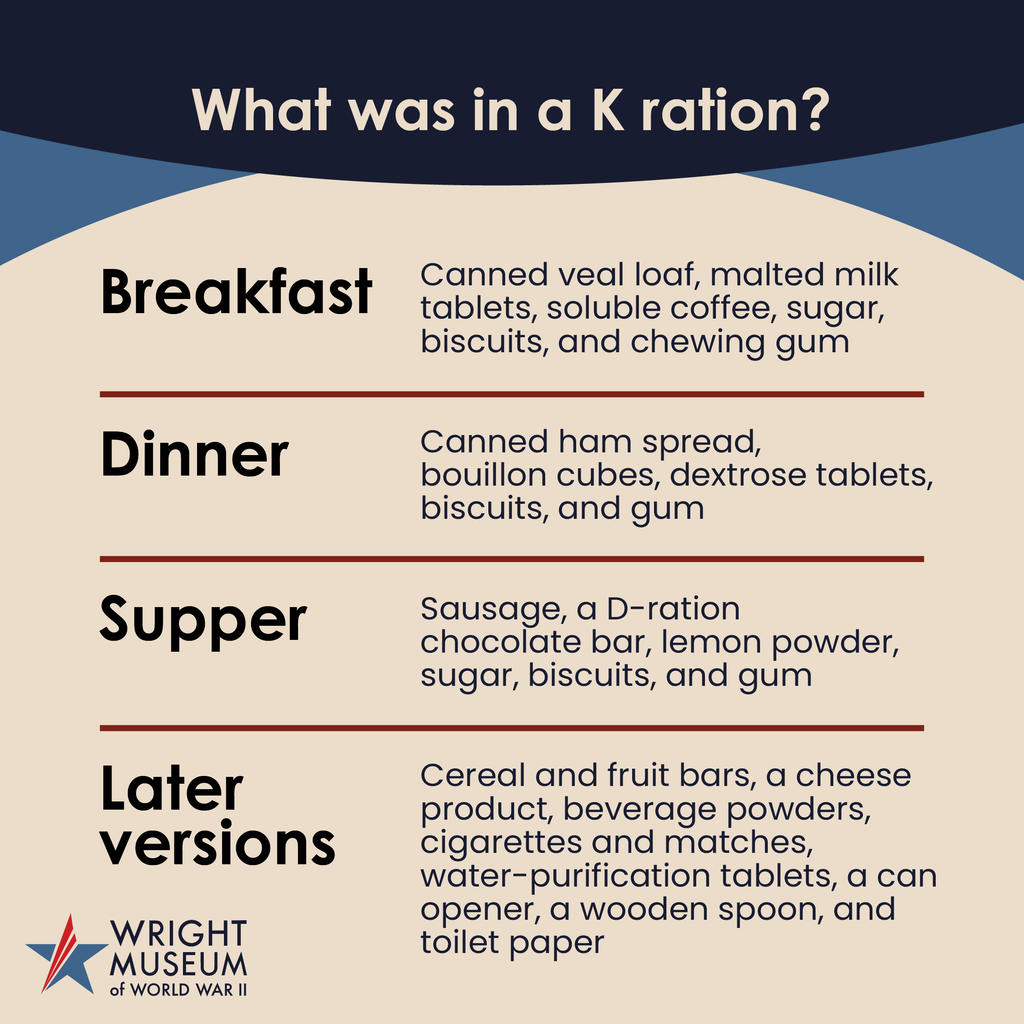
The Army adopted Field Ration, Type K, for all services in 1942 and ordered the first million in May. Each day’s ration came as three separate meals: breakfast, dinner, and supper, each in a box about the size of a Cracker Jack box. Over the course of the war, the ration went through seven revisions, and production peaked in 1944 at more than 105 million rations. The name produced its own small mystery. Keys remembered being surprised when “the packages start[ed] to roll in with ‘K’ on them,” and said he received a letter from Paul Logan, by then a colonel, the same officer who had ordered the D bar from Hershey, saying “he hoped I wouldn’t mind.” The Army Quartermaster Museum offers a more prosaic explanation: the letter K “had no significance other than providing phonetic differentiation” from C and D.
The D Ration and its Successor
By the time the United States entered the war, Hershey’s rock-hard bar was in full production. Monthly output rose from 200,000 bars in September 1941 to 10 million by September 1942, and on August 22, 1942, the company received the Army-Navy “E” Award for exceeding production expectations. After Pearl Harbor, the Army planners worried about poison gas, so every bar was heat-sealed in cellophane, boxed, and dipped in wax. The bars had real uses in the field. When Louis Zamperini’s plane went down in the Pacific in 1943, he drifted on a life raft for 47 days. The raft’s emergency supplies included chocolate bars, though Zamperini and his fellow survivors lived mostly on rainwater and whatever fish and birds they could catch.
Commanders eventually asked for something soldiers would willingly eat. In 1943, Hershey developed its Tropical Chocolate Bar, which was still heat-resistant but had what Smithsonian Magazine calls “a more appealing (but not too appealing) flavor.” Hershey estimates that between 1940 and 1945 it produced more than three billion ration units. The Tropical Bar later went to the moon with the Apollo 15 astronauts in 1971.
The 10-In-1
Not every soldier was on the move. For small groups operating ahead of the field kitchens but not yet in combat, the Army adopted a 10-in-1 ration in the fall of 1943. One package of about 50 pounds fed ten men for a day, a group ration that a squad could prepare together.
Brand Names That Went to War
Some of what soldiers carried came not from Army laboratories but from American companies that saw both a patriotic duty and a business opportunity.
M&M’s
Forrest Mars patented his candy-coated chocolates on March 1, 1941. A partnership with Bruce Murrie of Hershey gave Mars access to rationed chocolate, and the candy was named for the two men’s last initials. M&M’s went on sale late in 1941. When the United States went to war, Mars won an exclusive contract to supply them for C rations. They were ideal for the purpose: They traveled well, and the candy shell kept them from melting. Soldiers came home with a taste for them, and M&M’s became a staple of American life.
SPAM
Hormel introduced SPAM in Austin, Minnesota, in 1937, and by 1940, according to The Saturday Evening Post, 70 percent of American households had tried it. SPAM was shelf-stable, could be eaten cooked or straight from the can, and was not rationed like beef.
SPAM also became a staple of Lend-Lease, the program that turned American factories and farms into suppliers for the Allies. Signed into law on March 11, 1941, nine months before Pearl Harbor, the Lend-Lease Act allowed the United States to lend or lease war supplies to any nation deemed “vital to the defense of the United States,” with payment deferred rather than demanded up front. Over the course of the war, the United States made Lend-Lease agreements with more than 30 countries and provided some $50 billion in aid.
After Lend-Lease began in 1941, Hormel was shipping up to 15 million cans of meat a week overseas, most of it SPAM. By 1944, more than 90 percent of the company’s canned food went to the government, and Hormel estimates that the equivalent of more than 133 million cans of SPAM fed soldiers and civilians overseas between 1940 and 1945.
Troops grew tired of it and coined nicknames, including “ham that didn’t pass its physical,” “meatloaf without basic training,” and “the reason war is hell.” Decades later, Dwight D. Eisenhower wrote to Hormel on its 75th anniversary, “I ate my share of SPAM along with millions of soldiers. I’ll even confess to a few unkind remarks about it.” As former commander in chief, he added, “I officially forgive you your only sin: sending us so much of it.”
INSTANT COFFEE
Nestlé developed Nescafé in 1936, partly to turn Brazil’s surplus coffee beans into a quick, low-waste product. The company used a spray-drying technique originally developed for powdered milk. In 1941, Nestlé began supplying Nescafé for American field rations, and after the war it went into relief packages sent to Europe and Japan. Soluble coffee became part of both the C and K rations.
COCA-COLA
When the United States entered the war, Coca-Cola President Robert Woodruff ordered the company “to see that every man in uniform gets a bottle of Coca-Cola for 5 cents, wherever he is and whatever it costs the company.” On June 29, 1943, an urgent cable from General Eisenhower’s headquarters in North Africa requested equipment for ten bottling plants, three million filled bottles, and supplies to produce the same amount twice a month. Within six months, a company engineer had opened the first plant in Algiers. By the end of the war, Coca-Cola had shipped 64 bottling plants overseas, and service members had consumed more than five billion bottles.
Less Water, More Food
Every inch of cargo space on a ship crossing the Atlantic or Pacific was precious, and much of the weight of ordinary food is simply water. Taking the water out became one of the war’s great technical projects.
Eggs showed what was possible. The modern method, spraying beaten whole eggs through a nozzle into a column of hot air, had been developed in the 1930s by a London cake manufacturer. When the British government lifted the patent, American companies began producing egg powder on an enormous scale. Dried eggs needed only about 20 percent of the shipping space of shell eggs, and in 1941 roughly one quarter of all eggs produced in the United States were dehydrated and shipped under Lend-Lease to Britain, China, and the Soviet Union.
Cheese was harder. Earlier attempts to dehydrate it had failed because heat made the milk fats melt and separate. In 1943, USDA scientist George Sanders solved the problem by grating and drying cheese at a low temperature, grinding it into powder, dehydrating it again, and pressing it into cakes. The result was the first true cheese powder, a much lighter and more compact way to ship dairy to the troops.
The same drying science had medical uses as well. According to the American Chemical Society, medics carried freeze-dried blood plasma to the front lines, and some troops received freeze-dried orange juice.
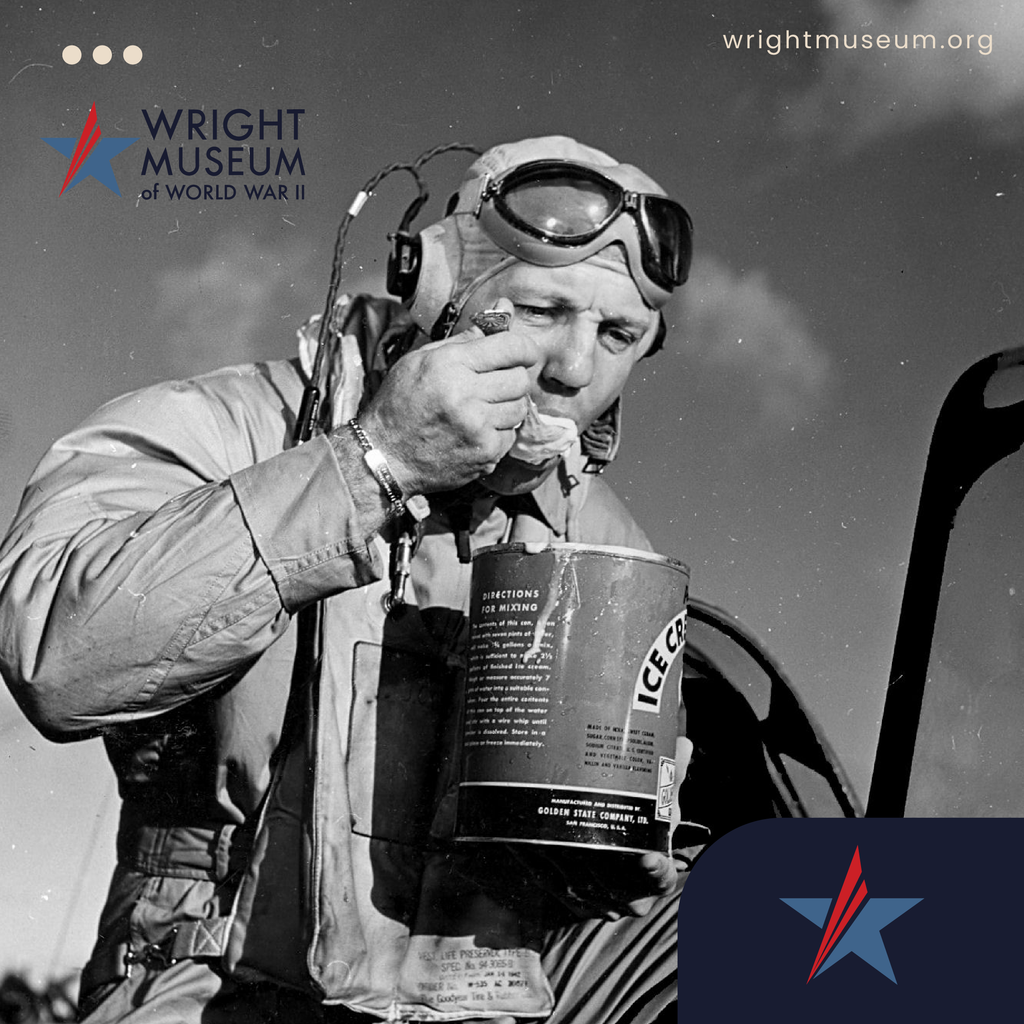
Orange juice, in fact, was the most stubborn problem of all. Soldiers needed vitamin C, but they tended to ignore the lemon crystals the military issued because they tasted unpleasant. Research on shipping orange juice economically began in 1942. For years, concentrating juice either left it bland or produced an unpleasant, turpentine-like flavor. The breakthrough came in 1945 from three Florida citrus researchers, Louis G. MacDowell, Edwin L. Moore, and Cedric D. Atkins, working with the U.S. Department of Agriculture. Their trick was simple, once someone thought of it. They concentrated the juice under vacuum at low temperatures and then “cut back” the concentrate with a little fresh juice to restore its flavor. They filed for a patent on August 7, 1945, and the rights were assigned to the United States government for royalty-free use.
That same year, the Army ordered 500,000 pounds of powdered orange juice. The Florida Foods Corporation, a new company founded by Richard Morse, whose National Research Corporation had already helped the Army powder penicillin and develop instant coffee, won the contract. The war ended before any of it shipped.
Source: USNI News, “Unique Ships of the U.S. Navy.”
Meanwhile, Back in the Kitchen
Readers of our “Autumn 1944: Waiting for the War to End” article will remember the ration books, victory gardens, and canning kitchens of the American home front. Food rationing began with sugar in May 1942. Coffee followed in November 1942, and meats, fats, canned fish, cheese, and canned milk joined the list in March 1943. Invention shaped the home front, too.
Kraft introduced its boxed macaroni and cheese dinner in 1937. During the war, it became a national favorite because it was cheap and filling, and two boxes cost only a single ration stamp. Kraft sold about 50 million boxes during the war. Restaurants offered meatless menus on certain days, and advertisers promoted meatless recipes such as walnut cheese patties and creamed eggs over pancakes.
Frozen food also got its chance. Clarence Birdseye and his competitors kept producing frozen foods throughout the war, according to the American Chemical Society, “largely because food rationing and a shortage of canned goods tempted consumers to try whatever was available.” By the end of the war, 45 companies were in the business, selling everything from ordinary vegetables to borscht, Lobster Newburg, and pork knuckle.
When the Laboratory Came Home
When the fighting stopped in 1945, the military was left with enormous stockpiles of powdered cheese, dehydrated foods, and the factories built to produce them. The government sold much of it to private industry, sometimes, according to the National Park Service, for pennies on the dollar. Companies such as Frito and Kraft knew exactly what to do with it.
In 1948, the Frito company coated puffed cornmeal in dehydrated cheese and created Cheetos. In Florida, the orange juice contract the Army never collected turned into a consumer product. Florida Foods, renamed the Vacuum Foods Corporation, began selling in 1946 the nation’s first frozen concentrated orange juice under a name a Boston marketing firm had suggested: Minute Maid. The company lost about $450,000 in its first two years. Then, in 1949, Bing Crosby became its spokesman in exchange for cash and 20,000 shares of stock, and every weekday morning he opened his CBS radio show with a pitch for frozen orange juice. The company soon renamed itself Minute Maid.
The most unexpected kitchen appliance of the postwar era came out of radar. During the war, a Raytheon engineer named Percy Spencer found a way to mass-produce magnetrons, the tubes at the heart of Allied radar sets, and earned the Navy’s Distinguished Public Service Award for it. One day, while standing near an active radar set, he noticed that a candy bar in his pocket had melted. He tried popcorn kernels next to see what would happen. They popped. An egg exploded in a colleague’s face during one of his unofficial experiments. On October 8, 1945, Raytheon filed a patent for cooking with microwaves, and in 1947, the first “Radarange” came on the market. The earliest models stood nearly six feet tall and weighed more than 750 pounds.
Ancel Keys’ wartime work did not end with the K ration. From November 1944 to October 1945, he ran the Minnesota Starvation Experiment, funded by the Army to learn how to “re-feed” millions of war victims, prisoners, and refugees. Thirty-six young conscientious objectors volunteered, and most lost about a quarter of their body weight before a careful program of re-feeding. Keys later became known for research linking diet and heart disease. As for his K ration, the Army declared it obsolete in 1948 and recommended that the remaining depot stocks go to feed civilians overseas.
The Army’s food research did not end with the war, either. Today, its research center at Natick, Massachusetts, still works on rations that taste better and last longer. Its work has influenced the processed cheese on crackers, longer-lasting bread, energy bars, and packaging for fresh produce. Author Anastacia Marx de Salcedo, who studied the center’s history for her book Combat-Ready Kitchen, estimates that about half of the items in today’s supermarkets have been influenced by military food research in some way.
From the Front Lines to the Kitchen Table
Captain Logan wanted a chocolate bar that tasted just a little better than a boiled potato. What he helped start was far larger: a national effort to understand what people need to eat, how to keep food safe and portable, and how to get it wherever it was needed. The same war that put a soldier’s dinner in a box the size of a Cracker Jack box also put a vitamin standard on the bread wrapper, a can of juice concentrate in the freezer, and eventually a microwave in almost every kitchen in America.
For the families who lived through it, the war changed the dinner table in ways both large and small. Many of those changes are still with us every time we open a box of macaroni and cheese, stir a spoonful of instant coffee, or pass around a bag of M&M’s.
Here at the Wright Museum of World War II, our Home Front Gallery brings that world back to life, with a replica 1940s kitchen, a full-size soda fountain, and the posters and everyday objects that show how ordinary Americans ate, saved, and made do during the war. Join us at the Museum from May 1 to October 31 to learn more about how the lessons of World War II continue to shape our country in profound and lasting ways.
Sources:
Information for this article, along with additional information, can be found on the following sites:
Opening: The D-Ration
- Hershey Community Archives, “Ration D Bars”
- Smithsonian Magazine, “When Hershey’s Crafted a Special Treat for the Troops”
An Army Marches on Its Stomach
- National Park Service, “Nutrition on the Home Front in World War II”
- U.S. Army Quartermaster Museum, “Army Operational Rations: Historical Background”
- U.S. Department of War, “‘C-Rats’ Fueled Troops During and After World War II”
The Science of the Plate
- Baking Business, “70 Years and Counting of Enriched Wheat”
- Library of Congress, “Margaret Mead: Human Nature and the Power of Culture,” National Character
- National Academies Press, “Recommended Dietary Allowances, 1941”
- National Library of Medicine (PMC), “Milestones in DRI Development: What Does the Future Hold?”
- National Park Service, “Nutrition on the Home Front in World War II”
- U.S. Holocaust Memorial Museum Collections, “Eat the Basic 7” poster
Rations in the Field
- Hershey Community Archives, “Ration D Bars”
- Military.com, “The Creator of K-Rations Became a Healthy Eating Advocate”
- Smithsonian Magazine, “When Hershey’s Crafted a Special Treat for the Troops”
- U.S. Army Quartermaster Museum, “Army Operational Rations: Historical Background”
- U.S. Army Quartermaster Museum, “The History of Rations”
- U.S. Department of War, “‘C-Rats’ Fueled Troops During and After World War II”
- University of Minnesota MBBNet, “Meet Monsieur Cholesterol”
Brand Names That Went to War
- The Coca-Cola Company, “The Chronicle of Coca-Cola: A Symbol of Friendship”
- Hormel Foods, “History with U.S. Military”
- Hormel Foods, “SPAM: The Wonder Food”
- National Park Service, “Post World War II Food”
- The Saturday Evening Post, “Spam: The Meat They Loved to Hate”
Less Water, More Food
- American Chemical Society, “Frozen Foods Research: Time-Temperature Tolerance Studies”
- Cambridge Historical Society, “Innovation in Cambridge: Frozen Orange Juice – National Research Corp.”
- The Coca-Cola Company, “Minute Maid: About Us”
- Florida Memory, State Library and Archives of Florida, “Inventors of Frozen Concentrate Form of Orange Juice”
- Food & Wine, “Would You Eat Dried Eggs? Inside the Curious World War II Phenomenon”
- National Park Service, “Post World War II Food”
- TIME, “How World War II Brought the World Frozen Orange Juice”
- U.S. Patent 2,453,109, “Method of Preparing Full-Flavored Fruit Juice Concentrates” (MacDowell, Moore, and Atkins)
- USDA National Agricultural Statistics Service, “Frozen Concentrated Orange Juice”
- USNI News, “Unique Ships of the U.S. Navy”
Meanwhile, Back in the Kitchen
- American Chemical Society, “Frozen Foods Research: Time-Temperature Tolerance Studies”
- Chicago Tribune, “Kraft Macaroni & Cheese: A History”
- The National WWII Museum, “Rationing”
When the Laboratory Came Home
- American Physical Society, “October 1945: First Patent for the Microwave”
- Anastacia Marx de Salcedo, Combat-Ready Kitchen: How the U.S. Military Shapes the Way You Eat (Internet Archive)
- MNopedia, Minnesota Historical Society, “Starvation Experiment of Dr. Ancel Keys, 1944-1945”
- National Inventors Hall of Fame, “Percy L. Spencer”
- National Park Service, “Post World War II Food”
- NPR, “Cheetos, Canned Foods, Deli Meat: How the U.S. Army Shapes Our Diet”
TIME, “How World War II Brought the World Frozen Orange Juice”